ExplorE / What might be possible?
Exploration is not the search for answers. It is the deliberate construction of uneasy questions. Across my work, design becomes a way of investigating bias & uncertainty: revealing assumptions, exposing alternatives and expanding what is imaginable before decisions are made.
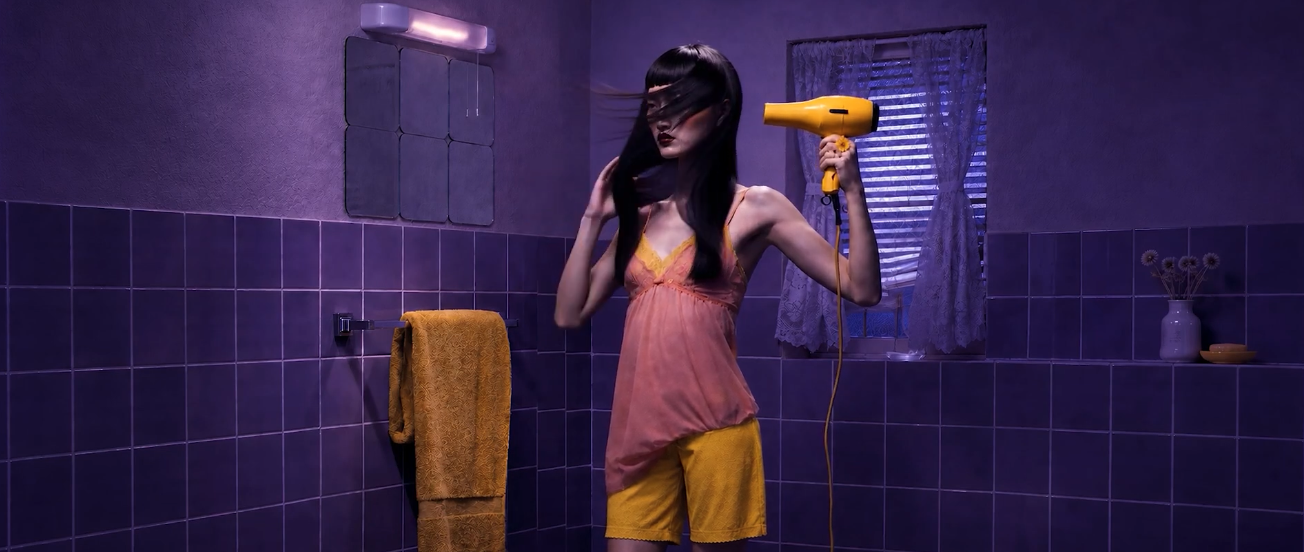
Q.1 EXPLORING PERSONAL FUTURES
EXPLORING how we construct our future selves?
A question that began with creative graduate entrepreneurship and evolved into a wider enquiry into imagination, agency and futures literacy.
-
This question first emerged for me through my book Don't Get a Job… Make a Job (Laurence King, 2016), long before I described my work in terms of futures literacy. At the time, I was interested in why creative graduates were taught to prepare for existing professions rather than imagine new ones. Looking back, I recognise this as the beginning of a much broader enquiry into imagination as agency: not simply the ability to picture alternatives, but to construct lives, practices and identities that have no established route into being. You can explore the 2023 new edition of the book here.
-
The book has travelled well beyond its original context. Initially taken up within scholarship on creative careers, entrepreneurship and graduate employability, more recent work increasingly draws on it to discuss imagination, agency, architectural education and alternative professional futures. George Morgan and Pariece Nelligan’s The Creativity Hoax reframes it within debates on precarious creative labour, while Flora Samuel’s Why Architects Matter quotes the work directly in arguing for greater agency within architectural practice. More recently, peer-reviewed research in the International Journal of Art & Design Education and Art, Design & Communication in Higher Education has used it to rethink studio pedagogy and future-oriented employability. Together, these citations reveal a broader shift: what began as a practical guide for creative graduates has become a conceptual reference point for understanding how people imagine, construct and navigate uncertain futures. The journey of the work mirrors the journey of the question itself—from helping individuals imagine new careers to helping researchers understand how imagination shapes professional, spatial and societal futures.
[add: A participatory Workforce Futures visiting role at the University of Wisconsin–Madison;] // The pattern shifts over time: early citations frame the book through entrepreneurship, leadership and precarious creative work; later work applies it to architectural pedagogy, sustainable artistic practice and simulated work experience in fashion education.
-
Morgan, G., & Nelligan, P. (2018). The Creativity Hoax: Precarious Work in the Gig Economy. Anthem Press. Book; Australia. Publisher record
Samuel, F. (2018). Why Architects Matter: Evidencing and Communicating the Value of Architects. Routledge. DOI: 10.4324/9781315768373. Book; United Kingdom. Publisher record
McLaughlan, R., & Chatterjee, I. (2020). “What Works in the Architecture Studio? Five Strategies for Optimising Student Learning.” International Journal of Art & Design Education, 39(3), 550–564. DOI: 10.1111/jade.12303. Peer-reviewed journal article; Australia. Article record
Geissler, S.-M. (2025). “Levelling Up: Gamifying Fashion Work Experience in North-East England through Playful Learning Resource Development.” Art, Design & Communication in Higher Education. DOI: 10.1386/adch_00104_1. Peer-reviewed journal article; United Kingdom. Article record
Miller, S. (2020). Career Management for Artists: A Practical Guide to Representation and Sustainability for Your Studio Practice. Routledge. Book; United States. Publisher record
Coulson-Thomas, C. (2017). “Leadership for Creativity, Innovation and Entrepreneurship.” Effective Executive, XX(2), 12–30. Professional journal article; United Kingdom. Download PDF
Coulson-Thomas, C. (2018). “Changing Preoccupations of India’s Business Leaders: Creativity, Innovation and Environment Leadership.” Aston–India Centre for Applied Research, 2nd Research Conference, Aston University, Birmingham. Conference paper; United Kingdom/India context. Repository record
Coulson-Thomas, C. (2017). “Creativity, Innovation and the Board.” Dubai Global Convention 2017 / 27th World Congress on Business Excellence and Innovation, Dubai. Institute of Directors India. Conference proceedings contribution; United Kingdom/UAE–India context. Repository record
Shepherd, V. J. (2019). An Autoethnographic Approach to Exploring My Participation in the Emerging Culture of Female Entrepreneurship. University of Alberta. Master’s/capping-project thesis; Canada. Repository record
De Rita, T. (2018). Tykkää! Tuore kuvataideopettaja persoonabrändiä rakentamassa [Like! A Newly Qualified Art Teacher Building a Personal Brand]. Aalto University. Master of Arts thesis; Finland. Download PDF
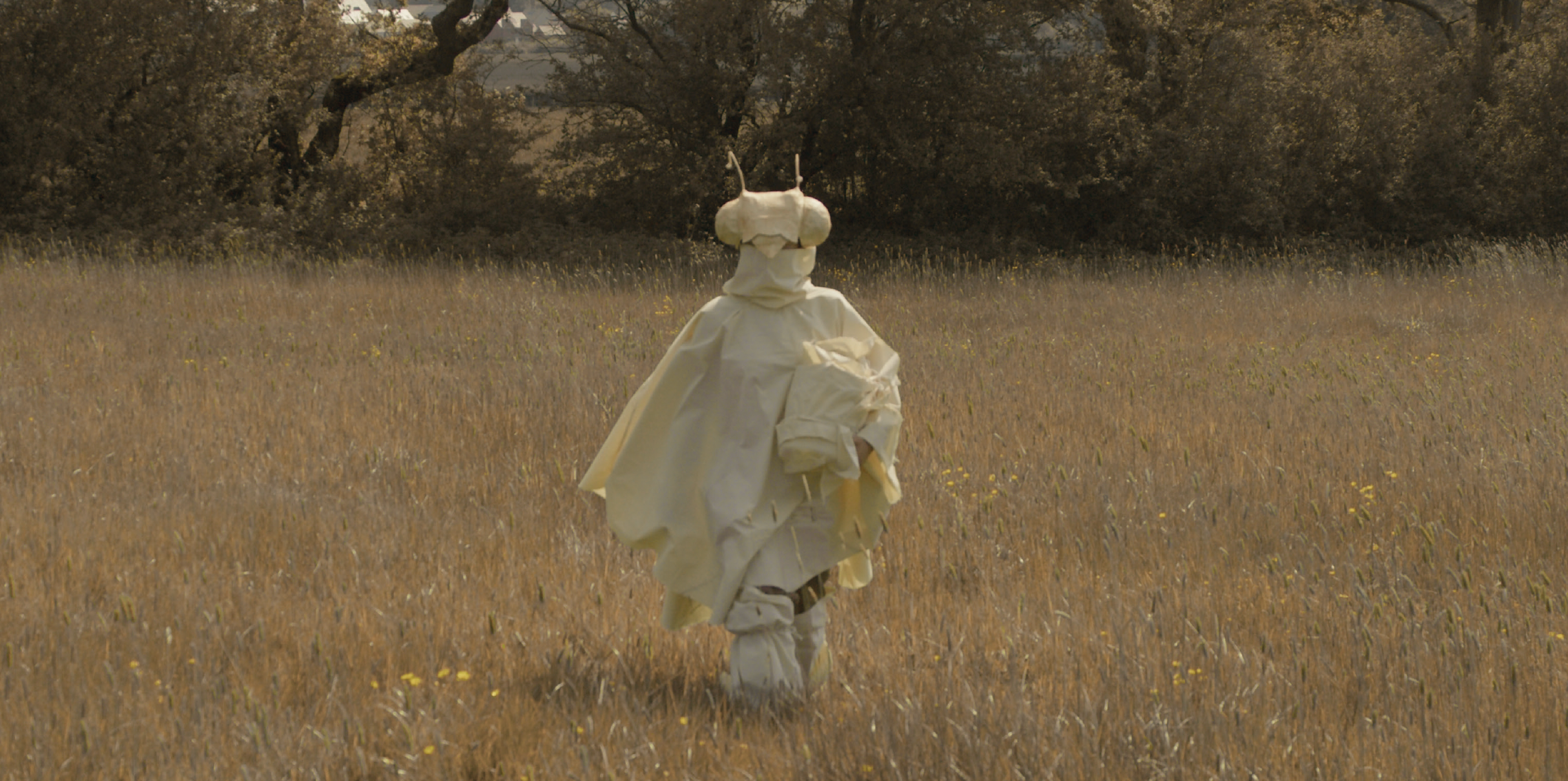
Q.2 EXPLORING SPACE AS CRITICAL METHOD
EXPLORING how spatial design could make uncertain futures available for critique?
A question that continues to test whether space can become a way of knowing, rather than simply a thing to be designed.
-
This question began in the design studio. Architecture is inherently future-facing, yet architectural education often asks students to imagine tomorrow through the assumptions of today. I became interested in whether space could do more than represent a possible future after it had been conceived. Could space itself become a method of enquiry—capable of exposing assumptions, tracing consequences and making uncertain futures available for critique?
The first response to that question was pedagogical. Through the Near Futurists' Alliance at the University of Brighton, I developed Experimental Realism as a way of investigating futures through spatial propositions rather than predictions. Students constructed partial worlds through film, artefacts, documents and environments—not to imagine what the future would be, but to ask how it might be lived, governed and experienced.
-
As the question matured, so did the methodology. In 2022 it became Design Studio Vol. 5: Experimental Realism: (Design) Fictions and Futures, bringing the work into dialogue with Liam Young, Benjamin Bratton, Anab Jain, Anthony Dunne, Fiona Raby and others working across speculative design and futures. More importantly, it argued that architecture required its own speculative methodology: one grounded not in products or scenarios, but in space.
That argument continued through superFUTURES at the Royal College of Art. Projects including meetCUTE, Nature's Depot and Ficta Ordo progressively expanded the enquiry—from media and digital culture, to ecological governance, to more-than-human systems of organisation. The projects differ, but the underlying question remains the same: how can spatial propositions help us investigate futures before they become reality?
Along the way, the question became larger than the methodology itself. Part of my contribution has been to help define and legitimise Speculative Spatial Design as a distinct field of enquiry, with its own methods, pedagogies and research agenda. Rather than borrowing speculative design into architecture, I argue that spatial practice contributes something distinctive: environments become evidence; interiors become arguments; worldbuilding becomes a form of research. Space is no longer simply the outcome of futures thinking—it becomes the method through which futures are explored.
As the question evolved, so too did its contexts. Experimental Realism moved beyond studio teaching into international education, public engagement and professional practice. It informed my appointment as Global Community Professor at Universidad de Monterrey, the Association of Architectural Educators keynote, Pedagogies of the Not-Yet: In Defence of Speculation, and lectures, workshops and masterclasses at CEPT University, Politecnico di Milano, Domus Academy, Parsons Paris, Sapienza University of Rome, the School of the Art Institute of Chicago, Northeastern University and the University of Wisconsin–Madison.
The enquiry also entered professional and cultural practice. At Harvard Graduate School of Design, it informed my contribution to Allen Sayegh's SYNTHIA exhibition, exploring uncertainty and collaboration as emergent design methodologies. Through my residency with Perkins&Will, it became The Futures We Build and its accompanying playbook for long-term thinking, translating speculative spatial enquiry into provocations for architectural practice. The same methods have since informed collaborations with Defra and strategic futures work with the UK Ministry of Justice.
More recently, the question has begun to travel independently of my own work. Maria Fedorchenko's peer-reviewed article, Cities of Specters, Transfers and Atopia, positions Experimental Realism within a fifteen-year research-design studio lineage. Satu Miettinen and colleagues' peer-reviewed conference paper, Strategic Foresight and Worldbuilding with Companies, draws directly on my chapter "Equitable and Desirable Futures" to frame worldbuilding and protopian filmmaking within organisational foresight. Together, these citations suggest that what began as a question about studio pedagogy is now contributing to wider conversations across architectural education, futures research, design methodology and organisational strategy.
-
Fedorchenko, M. (2025). “Cities of Specters, Transfers and Atopia: The Research-Design Studio Experiment.” Architecture and Culture, 13(1–2), 243–264. DOI: 10.1080/20507828.2026.2652717. Peer-reviewed journal article; United Kingdom.Article record.
Miettinen, S., Sarantou, M., Björn, E., Uusitalo, T., & Kontio, T. (2024). “Strategic Foresight and Worldbuilding with Companies.” In L. Imbesi & A. Perlatti (Eds.), Design Across Borders—United in Creativity 1 (pp. 282–302). Cumulus Conference Proceedings, No. 13. Peer-reviewed conference paper; Finland/Japan, presented in Mexico.Repository record and PDF.
Mingo Escuredo, M. (2024). Análisis de la prospección de futuros aplicable a un proceso de diseño. Universidad Rey Juan Carlos. Undergraduate dissertation; Spain.Repository record and PDF.
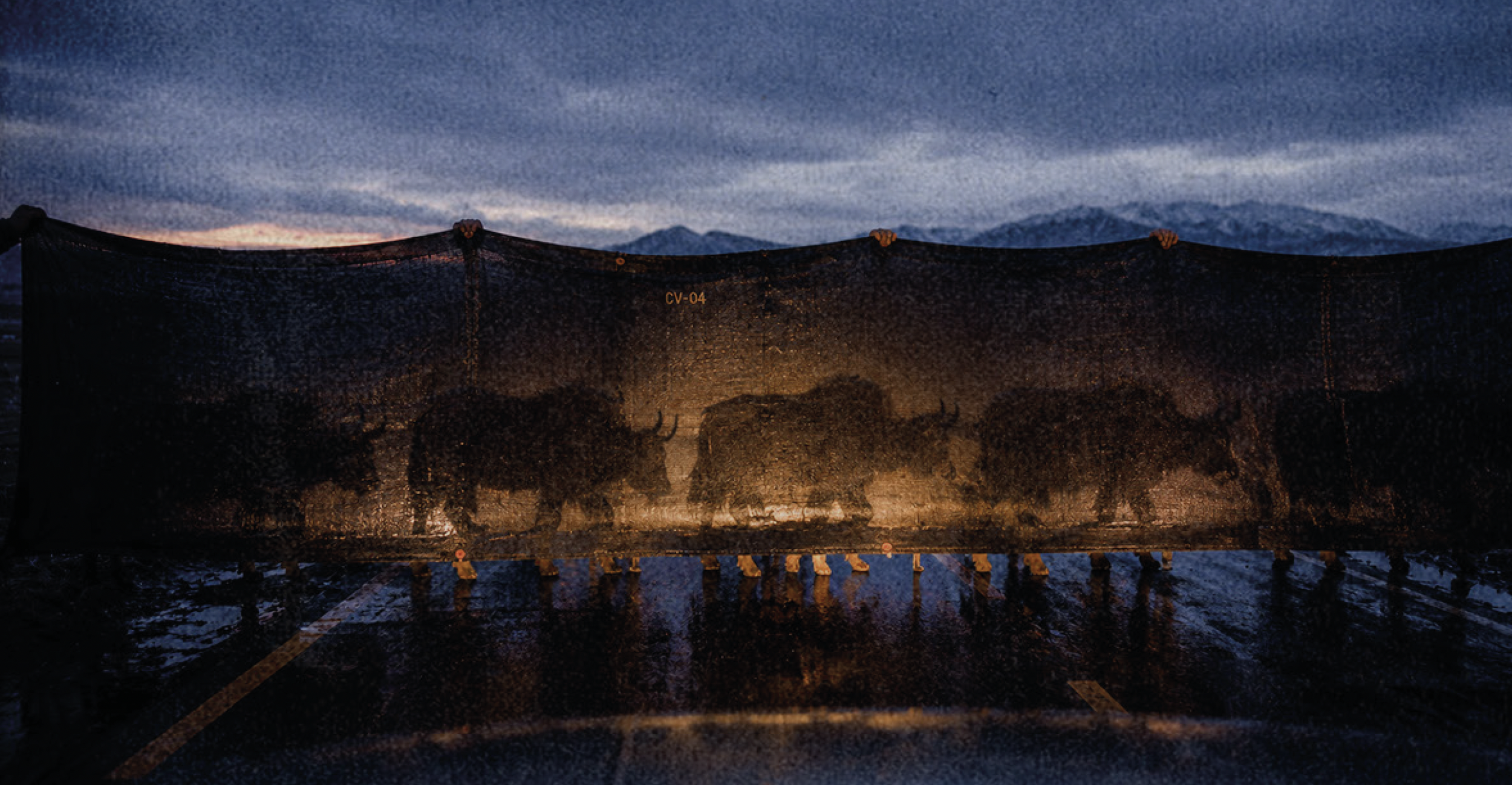
Q.3 EMBODYING FUTURES
EXPLORING how can futures become embodied through design and space?
A question that asks what changes when futures are experienced rather than told.
-
This question emerged from a growing dissatisfaction with futures work that remained at the level of the report, the scenario, the digram - …could describe possible futures, but they rarely communicated their atmosphere, politics or everyday consequences. I became interested in whether design could do more than illustrate another world. Could it construct situations in which people briefly encountered different ways of living, behaving and relating?
This enquiry builds upon a wider lineage of speculative design that has used fiction, narrative and performance to interrogate the present. Designers including Anthony Dunne and Fiona Raby, Liam Young, Anab Jain and Superflux have demonstrated how imagined worlds can provoke reflection and debate. My own work extends this conversation through architecture and interiors, asking how spatial practice might contribute its own methods of embodied enquiry.
-
A central part of that exploration has been filmmaking. Rather than treating film as a way of documenting projects or visualising completed ideas, I have increasingly used it as a spatial research method. Through sequence, atmosphere, sound, movement and occupation, film enables architecture to investigate questions that drawings alone cannot.
This argument first emerged in my chapter "The Grey Area Between Architects and Filmmakers", before developing through Experimental Realism, Speculative Spatial Design and superFUTURES. Here, moving image becomes a way of generating spatial knowledge rather than simply representing spatial ideas. Film asks not only what a future might look like, but how it might be inhabited, negotiated and felt.
Across projects including meetCUTE, Nature's Depot, Ficta Ordo and Residues of Ritual, film sits alongside interiors, artefacts and performance as part of a broader methodology for rehearsing futures through embodied experience.
The enquiry now extends beyond production into reception. My current collaboration with Lucy McRae, Consuming Futures, investigates how audiences consume speculative futures through film, exhibitions and immersive environments.
The question has travelled through teaching, exhibitions and consultancy. It underpins the pedagogy of superFUTURES at the Royal College of Art; informed Allen Sayegh's SYNTHIA exhibition at Harvard Graduate School of Design; contributed to the United Nations Foundation / ASRA exhibition in Paris; and continues to shape invited lectures, workshops and keynotes on speculative spatial design, worldbuilding, filmmaking and futures literacy.
-
Barton, G. (2016). “The Grey Area between Reality and Representation: The Practices of Architects and Film-makers.” In E. Clift, M. Guaralda and A. Mattes (eds.), Filming the City: Urban Documents, Design Practices and Social Criticism through the Lens, pp. 165–181. Intellect. Book chapter. Repository record and PDF.
Barton, G. (ed.) (2022). Design Studio Vol. 5: Experimental Realism: (Design) Fictions and Futures. RIBA Publishing. Edited book. Publisher record.
Barton, G. and McRae, L. Consuming Futures. Article in development. This should not yet be described as peer-reviewed or assigned a final subtitle, journal or publication date.
ExplorE / What might be possible?
Exploration is not the search for answers. It is the deliberate construction of questions that cannot yet be resolved. Across my work, design becomes a way of investigating uncertainty: revealing assumptions, exposing alternatives and expanding what becomes imaginable before decisions are made.
EXPLORING… HOW WE IMAGINE OUR OWN FUTURES?
This question first emerged for me through my book Don't Get a Job… Make a Job (Laurence King, 2016), long before I described my work in terms of futures literacy. At the time, I was interested in why creative graduates were taught to prepare for existing professions rather than imagine new ones. Looking back, I recognise this as the beginning of a much broader enquiry into imagination as agency: not simply the ability to picture alternatives, but to construct lives, practices and identities that have no established route into being. You can explore the 2023 new edition of the book here.
The book has travelled well beyond its original context. Initially taken up within scholarship on creative careers, entrepreneurship and graduate employability, more recent work increasingly draws on it to discuss imagination, agency, architectural education and alternative professional futures. George Morgan and Pariece Nelligan’s The Creativity Hoax reframes it within debates on precarious creative labour, while Flora Samuel’s Why Architects Matter quotes the work directly in arguing for greater agency within architectural practice. More recently, peer-reviewed research in the International Journal of Art & Design Education and Art, Design & Communication in Higher Education has used it to rethink studio pedagogy and future-oriented employability. Together, these citations reveal a broader shift: what began as a practical guide for creative graduates has become a conceptual reference point for understanding how people imagine, construct and navigate uncertain futures. The journey of the work mirrors the journey of the question itself—from helping individuals imagine new careers to helping researchers understand how imagination shapes professional, spatial and societal futures.
[add: A participatory Workforce Futures visiting role at the University of Wisconsin–Madison;] // The pattern shifts over time: early citations frame the book through entrepreneurship, leadership and precarious creative work; later work applies it to architectural pedagogy, sustainable artistic practice and simulated work experience in fashion education.
Verified citing works
Morgan, G., & Nelligan, P. (2018). The Creativity Hoax: Precarious Work in the Gig Economy. Anthem Press. Book; Australia. Publisher record
Samuel, F. (2018). Why Architects Matter: Evidencing and Communicating the Value of Architects. Routledge. DOI: 10.4324/9781315768373. Book; United Kingdom. Publisher record
McLaughlan, R., & Chatterjee, I. (2020). “What Works in the Architecture Studio? Five Strategies for Optimising Student Learning.” International Journal of Art & Design Education, 39(3), 550–564. DOI: 10.1111/jade.12303. Peer-reviewed journal article; Australia. Article record
Geissler, S.-M. (2025). “Levelling Up: Gamifying Fashion Work Experience in North-East England through Playful Learning Resource Development.” Art, Design & Communication in Higher Education. DOI: 10.1386/adch_00104_1. Peer-reviewed journal article; United Kingdom. Article record
Miller, S. (2020). Career Management for Artists: A Practical Guide to Representation and Sustainability for Your Studio Practice. Routledge. Book; United States. Publisher record
Coulson-Thomas, C. (2017). “Leadership for Creativity, Innovation and Entrepreneurship.” Effective Executive, XX(2), 12–30. Professional journal article; United Kingdom. Download PDF
Coulson-Thomas, C. (2018). “Changing Preoccupations of India’s Business Leaders: Creativity, Innovation and Environment Leadership.” Aston–India Centre for Applied Research, 2nd Research Conference, Aston University, Birmingham. Conference paper; United Kingdom/India context. Repository record
Coulson-Thomas, C. (2017). “Creativity, Innovation and the Board.” Dubai Global Convention 2017 / 27th World Congress on Business Excellence and Innovation, Dubai. Institute of Directors India. Conference proceedings contribution; United Kingdom/UAE–India context. Repository record
Shepherd, V. J. (2019). An Autoethnographic Approach to Exploring My Participation in the Emerging Culture of Female Entrepreneurship. University of Alberta. Master’s/capping-project thesis; Canada. Repository record
De Rita, T. (2018). Tykkää! Tuore kuvataideopettaja persoonabrändiä rakentamassa [Like! A Newly Qualified Art Teacher Building a Personal Brand]. Aalto University. Master of Arts thesis; Finland. Download PDF
EXPLORING… SPACE AS A METHOD FOR IMAGINING FUTURES?
This question began in the design studio. Architecture is inherently future-facing, yet architectural education often asks students to imagine tomorrow through the assumptions of today. I became interested in whether space could do more than represent a possible future after it had been conceived. Could space itself become a method of enquiry—capable of exposing assumptions, tracing consequences and making uncertain futures available for critique?
The first response to that question was pedagogical. Through the Near Futurists' Alliance at the University of Brighton, I developed Experimental Realism as a way of investigating futures through spatial propositions rather than predictions. Students constructed partial worlds through film, artefacts, documents and environments—not to imagine what the future would be, but to ask how it might be lived, governed and experienced.
As the question matured, so did the methodology. In 2022 it became Design Studio Vol. 5: Experimental Realism: (Design) Fictions and Futures, bringing the work into dialogue with Liam Young, Benjamin Bratton, Anab Jain, Anthony Dunne, Fiona Raby and others working across speculative design and futures. More importantly, it argued that architecture required its own speculative methodology: one grounded not in products or scenarios, but in space.
That argument continued through superFUTURES at the Royal College of Art. Projects including meetCUTE, Nature's Depot and Ficta Ordo progressively expanded the enquiry—from media and digital culture, to ecological governance, to more-than-human systems of organisation. The projects differ, but the underlying question remains the same: how can spatial propositions help us investigate futures before they become reality?
Along the way, the question became larger than the methodology itself. Part of my contribution has been to help define and legitimise Speculative Spatial Design as a distinct field of enquiry, with its own methods, pedagogies and research agenda. Rather than borrowing speculative design into architecture, I argue that spatial practice contributes something distinctive: environments become evidence; interiors become arguments; worldbuilding becomes a form of research. Space is no longer simply the outcome of futures thinking—it becomes the method through which futures are explored.
As the question evolved, so too did its contexts. Experimental Realism moved beyond studio teaching into international education, public engagement and professional practice. It informed my appointment as Global Community Professor at Universidad de Monterrey, the Association of Architectural Educators keynote, Pedagogies of the Not-Yet: In Defence of Speculation, and lectures, workshops and masterclasses at CEPT University, Politecnico di Milano, Domus Academy, Parsons Paris, Sapienza University of Rome, the School of the Art Institute of Chicago, Northeastern University and the University of Wisconsin–Madison.
The enquiry also entered professional and cultural practice. At Harvard Graduate School of Design, it informed my contribution to Allen Sayegh's SYNTHIA exhibition, exploring uncertainty and collaboration as emergent design methodologies. Through my residency with Perkins&Will, it became The Futures We Build and its accompanying playbook for long-term thinking, translating speculative spatial enquiry into provocations for architectural practice. The same methods have since informed collaborations with Defra and strategic futures work with the UK Ministry of Justice.
More recently, the question has begun to travel independently of my own work. Maria Fedorchenko's peer-reviewed article, Cities of Specters, Transfers and Atopia, positions Experimental Realism within a fifteen-year research-design studio lineage. Satu Miettinen and colleagues' peer-reviewed conference paper, Strategic Foresight and Worldbuilding with Companies, draws directly on my chapter "Equitable and Desirable Futures" to frame worldbuilding and protopian filmmaking within organisational foresight. Together, these citations suggest that what began as a question about studio pedagogy is now contributing to wider conversations across architectural education, futures research, design methodology and organisational strategy.
Verified citing works
Fedorchenko, M. (2025). “Cities of Specters, Transfers and Atopia: The Research-Design Studio Experiment.” Architecture and Culture, 13(1–2), 243–264. DOI: 10.1080/20507828.2026.2652717. Peer-reviewed journal article; United Kingdom. Article record.
Miettinen, S., Sarantou, M., Björn, E., Uusitalo, T., & Kontio, T. (2024). “Strategic Foresight and Worldbuilding with Companies.” In L. Imbesi & A. Perlatti (Eds.), Design Across Borders—United in Creativity 1 (pp. 282–302). Cumulus Conference Proceedings, No. 13. Peer-reviewed conference paper; Finland/Japan, presented in Mexico. Repository record and PDF.
Mingo Escuredo, M. (2024). Análisis de la prospección de futuros aplicable a un proceso de diseño. Universidad Rey Juan Carlos. Undergraduate dissertation; Spain. Repository record and PDF.